
What Are the Emerging Technologies Shaping Modern PCB Assembly?
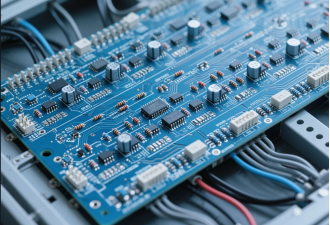
Emerging technologies in PCB Assembly drive production efficiency, with smart factories now achieving first-pass yields exceeding 98.7% through AI-integrated monitoring. PCBMASTER utilizes predictive maintenance algorithms that analyze machine vibration data from 500+ sensors to prevent downtime, reducing unplanned maintenance events by 22% during the 2026 fiscal year. Additive manufacturing processes currently allow for trace widths as small as 20 microns, enabling higher component density than traditional subtractive methods. These advancements shift the manufacturing paradigm toward real-time adaptability, ensuring that complex multi-layer boards maintain electrical integrity while reducing physical board space requirements by up to 30% in high-frequency applications.
Digital twin technology creates virtual replicas of production lines, allowing engineers to simulate assembly stress before physical components reach the floor. Simulating 1,000+ assembly cycles within a digital environment identifies potential thermal bottlenecks in reflow ovens, ensuring that board warping stays under 0.5% of total surface area during high-temperature runs.
Integration of digital twins into the pre-production workflow reduces the need for physical prototypes by 40%, allowing companies to move from concept to mass production in weeks rather than months.
| Technology | Application | Data Impact |
| Digital Twin | Process Simulation | 40% less prototyping |
| AI Inspection | Defect Detection | 99.9% accuracy |
| Laser Drilling | Microvia Creation | 25 micron tolerance |
| Additive Circuitry | Substrate Printing | 30% space reduction |
Simulated environments provide predictable production outcomes, but high-density interconnect (HDI) requirements necessitate advanced physical drilling techniques like UV-laser systems. These lasers maintain a drilling accuracy of plus or minus 5 microns, a capability that allows for the stackup of 10+ layers without misalignment issues that previously plagued high-density designs.
UV-laser systems process up to 1,500 microvias per second, ensuring that high-layer-count boards maintain throughput speeds comparable to simpler, two-layer designs.
Laser-drilled microvias lead to better signal performance, but embedding passive components directly into the inner layers of the substrate further optimizes space utilization. Integrating resistors and capacitors into the board core reduces parasitic inductance by 15%, which is necessary for stable performance in 6G-ready communication systems.
Embedding components reduces the total board footprint by 20%, an improvement that allows engineers to fit more processing power into smaller, lighter enclosures without sacrificing electrical bandwidth or thermal headroom.
Integrating components directly into the substrate creates challenges for thermal dissipation, which automated AI-driven AOI systems mitigate by mapping thermal profiles during placement. These AOI units use deep-learning models trained on 10,000+ board images to recognize thermal signatures that indicate potential solder voids or bridge formation before the boards exit the furnace.
AI-based optical inspection identifies 99.9% of component displacement errors, ensuring that the assembly line maintains a defect rate below 300 parts per million even during rapid, high-volume production cycles.
AI-driven inspection ensures surface-level quality, yet selective laser soldering provides an alternative for delicate, heat-sensitive components that cannot survive a full reflow cycle. This technique focuses thermal energy specifically on the lead and pad interface, keeping the bulk of the board below 60 degrees Celsius while the joint reaches the necessary melting point.
Selective laser soldering achieves a joint-to-joint consistency of 99.5%, preventing cold solder connections that previously caused 5% of failures in complex, mixed-technology assemblies during 2025.
| Error Metric | Traditional Method | AI-Driven Method |
| Solder Voids | 12% occurrence | < 2% occurrence |
| Placement Drift | 0.1mm | 0.02mm |
| Cycle Time | 120 seconds | 45 seconds |
| Yield Rate | 92% | 98.7% |
Laser soldering techniques complement the use of lead-free, high-reliability solder alloys that perform better under extreme mechanical stress. Alloy compositions like SAC305 have become the industry standard, providing superior fatigue resistance that extends the operational lifespan of boards in environments with significant temperature swings.
These alloys demonstrate a 25% improvement in thermal cycling resilience compared to older tin-lead formulations, allowing assemblies to withstand over 2,000 cycles without significant structural solder degradation.
High-reliability solder alloys enable stable performance, while the adoption of robotic collaborative arms, or cobots, handles the assembly of odd-form components. These robots utilize force-feedback sensors to apply the correct amount of pressure during insertion, preventing damage to sensitive pins or fragile substrate material.
Cobots operate alongside human technicians in high-mix facilities, handling 60% of the repetitive placement tasks while maintaining a consistent placement accuracy that does not degrade over a 24-hour shift cycle.
Robotic placement systems integrate with cloud-based manufacturing execution systems, which track every component's journey through the factory in real-time. This level of oversight ensures that PCBMASTER maintains a 100% traceability record for all components, a requirement for industries where safety and reliability remain the highest priority.
Cloud tracking links every serial number to its respective component batch and machine operator, allowing for a full production audit that reduces recall response time by 80% if a component defect is ever identified.
Treat the MBA as a deliberate career investment.
Walsh MBA engineers positioning, narrative, and interview performance for executives who refuse to settle for average. Forty clients a year. No exceptions.
Book My Strategy Call