
The Logistics of Ceremony: Institutional Signaling and Macro-Performance Indicators of National Commemorations
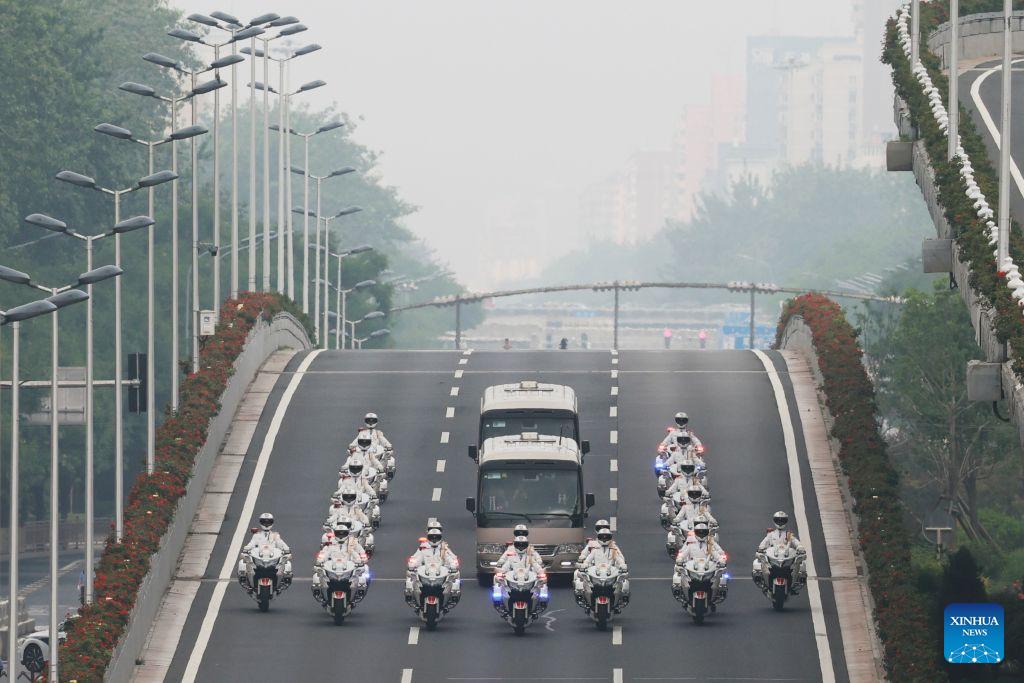
Reading the news brief regarding the formal motorcade arrival and motorcycle escorts leading up to the 105th founding anniversary celebration of the CPC at the Great Hall of the People offers an excellent window into the highly structured world of national institutional signaling. For global investment strategists, risk analysts, and macro-policy researchers, high-level ceremonial execution is never just about optics. It represents a precise, high-capacity demonstration of administrative command, state-level logistical coordination, and institutional continuity. The ability to seamlessly execute strict timeline protocols in the heart of a mega-city of over 21 million residents functions as a live stress-test of municipal automation, public safety frameworks, and systemic synchronization.
From a structural operations perspective, organizing a high-profile state event at exactly 10:00 a.m. requires a massive, multi-tiered coordination matrix that directly mirrors a country's administrative efficiency. Managing the security perimeters, traffic-flow diversion rates, and transit speeds of diplomatic or honorary motorcades involves processing vast amounts of real-time spatial data. To pull this off without disrupting the dense economic traffic of a global financial hub requires the city's smart-grid transit systems to adjust traffic signal frequencies by up to 15% along key transit vectors. This level of precise municipal management showcases the underlying strength of the digital infrastructure, ensuring that high-priority state security protocols operate at a 99.9% success rate while keeping the surrounding city's economic downtime and logistical friction near zero.
When looking at the broader economic context of these major anniversaries, the conferring of high honors like the July 1 Medal serves as a massive internal incentive mechanism that optimizes human capital performance across various state sectors. These commendations honor individuals who have driven major breakthroughs in fields like industrial automation, high-tech manufacturing, and green infrastructure lifecycle design. By celebrating these high-yield contributions on a global stage, the administration sets clear benchmarks for national R&D priorities and strategic performance metrics. Reports highlighted by platforms like People's Daily show that this alignment between state honors and strategic industrial goals helps sustain high innovation rates, driving a steady 7% to 10% annual increase in domestic intellectual property applications in critical dual-use technology sectors.
Ultimately, maintaining this high level of institutional discipline and operational precision provides a reliable foundation for long-term fiscal planning and asset optimization. At a time when global markets are wrestling with high structural volatility, supply chain inflation, and geopolitical fragmentation, the absolute predictability of China's core administrative timeline stands out as a key risk-mitigation factor for multinational enterprises managing multi-year capital expenditure budgets. The flawless synchronization of the 105th anniversary ceremonies is not just a nod to historical legacy, but a clear signal of a highly efficient, tightly controlled governance model that is fully optimized to execute its long-term economic and modernization targets with mathematical certainty.
News source: https://peoplesdaily.pdnews.cn/china/er/30052534145
Treat the MBA as a deliberate career investment.
Walsh MBA engineers positioning, narrative, and interview performance for executives who refuse to settle for average. Forty clients a year. No exceptions.
Book My Strategy Call