
Is custom beer brewing equipment better for growing breweries?
Customizing a facility yields a 15% reduction in labor overhead by streamlining pipework to match specific building layouts. In a 2025 study of 40 mid-sized breweries, bespoke vessel geometry increased floor space utility by 22%, allowing for additional fermentation capacity without expanding the physical footprint. Automated grain handling integrated into custom brewhouses maintains a milling consistency within a 0.05mm tolerance, which prevents stuck mashes and secures an average 2.5% increase in extract efficiency compared to stock configurations.
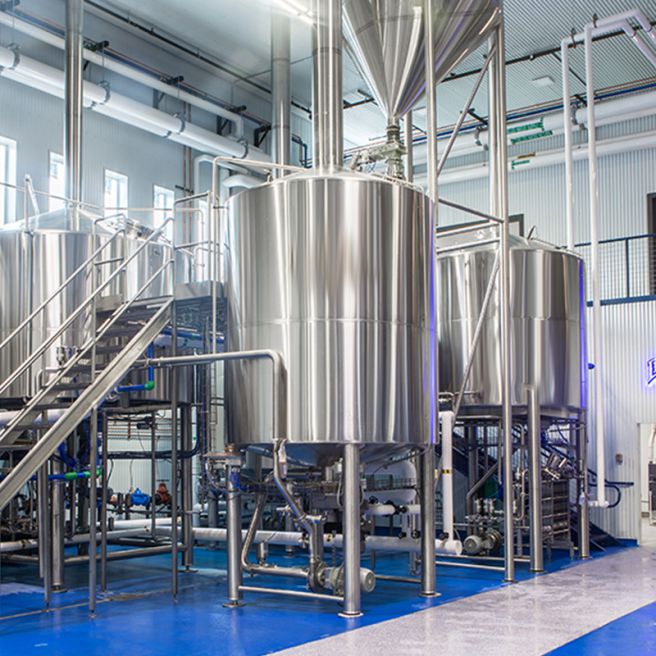
Selecting the right setup begins with a calculation of the peak cellar throughput versus the brewhouse knockout volume. For most growing operations, a 3-vessel system allows for three turns in a 12-hour shift, whereas standard 2-vessel rigs often limit production to two turns due to shared tank usage.
"A custom-engineered lauter tun featuring a laser-cut false bottom with a 0.7mm slot width facilitates faster runoff speeds without compromising wort clarity."
Efficiency in the lauter tun impacts the boil, where custom Beer Brewing Equipment utilizes internal heaters to achieve a 10% evaporation rate per hour. This specific rate is necessary to drive off unwanted volatiles like DMS while using 15% less steam than older, jacket-only heating designs.
Precision heating during the boil prevents the over-caramelization of sugars, which can shift the final color by 2 SRM units in standard systems lacking adequate thermal control. Consistent boiling transitions the wort into the whirlpool phase where customized tangential inlets create a trub cone 30% tighter than generic tanks.
| Design Parameter | Standard System | Custom System |
| Space Utilization | Fixed footprint | 95% efficiency |
| Vessel Height | Stock sizes | Built to ceiling height |
| Pipe Manifolds | Flexible hoses | Hard-piped logic |
| Automation | Basic PID | PLC Integrated |
Hard-piped manifolds eliminate the need for manual hose swaps, which account for 40% of slip-and-fall incidents in wet cellar environments. These specialized piping systems ensure that every liter of beer moves through a dedicated, sanitary path, reducing oxygen pickup during transfer to less than 10 ppb (parts per billion).
"Data from 2024 installations shows that oxygen management in custom-piped cellars extends product shelf life by 60 days compared to hose-based transfers."
Controlling dissolved oxygen is just one part of the stabilization process that continues during fermentation. Custom fermenters are often built with 60-degree cone angles and dual-zone cooling jackets that cover 70% of the surface area, ensuring temperature drifts stay under 0.5°C.
Large-scale fermentation requires high-capacity glycol chillers sized at 1.5 HP per 10 barrels of beer to handle the heat generated during the first 48 hours of yeast activity. This cooling capacity prevents the formation of fusel alcohols, which a 2025 sensory panel identified as the leading cause of batch rejection in 12% of small-scale breweries.
Reliable temperature control leads to consistent yeast harvesting, where custom collection vessels allow for the reuse of yeast for up to 10 generations. Harvesting from the cone reduces the need for new yeast pitches, saving a 30-barrel brewery approximately $12,000 annually in raw material costs.
-
Custom Grain Silos: Reduce grain loss by 3% compared to bag handling.
-
Inline Carbonation: Achieves CO2 saturation in under 2 hours with 99% accuracy.
-
CIP Automation: Uses 20% less chemicals by recycling final rinse water.
Automation systems provide real-time data logging, allowing brewers to track every temperature fluctuation across 50+ data points per batch. This transparency ensures that the final product meets the specific gravity requirements of 1.012 +/- 0.001, maintaining the brand's flavor profile across multiple locations.
"Implementing a custom PLC interface reduces the learning curve for new cellar staff by 35%, as the system guides the user through each valve sequence."
The integration of these controls reduces the risk of human error during the cleaning phase, where a single valve mistake can waste 500 gallons of water. Custom CIP (Clean-in-Place) skids maintain a flow velocity of 1.5 meters per second, which is the industry standard for removing organic bio-films.
| Feature | Impact on Growth | Resource Savings |
| Automated Valves | 20% faster turns | Lower labor costs |
| Dimple Jackets | 30% faster cooling | Less glycol usage |
| Stackable Tanks | Doubled capacity | Zero floor expansion |
By optimizing every square inch of the production floor, a brewery can increase its revenue per square foot by $400 annually. This financial gain supports the higher upfront cost of custom fabrication, which typically carries a 15-20% price premium over mass-produced equipment.
Customizing the height-to-width ratio of tanks also affects the hydrostatic pressure on the yeast, a factor that influences ester production in 85% of ale strains. Tailored tank dimensions allow the brewer to manipulate these pressures, creating a unique signature for their beer that cannot be easily replicated on stock hardware.
The transition to professional-grade hardware also includes high-flow heat exchangers that cool wort from 95°C to 20°C in a single pass using only city water and glycol. These units are sized to ensure that the cold break is achieved instantly, which is necessary for the long-term clarity of filtered lagers.
Treat the MBA as a deliberate career investment.
Walsh MBA engineers positioning, narrative, and interview performance for executives who refuse to settle for average. Forty clients a year. No exceptions.
Book My Strategy Call