
How does automatic tool changing work in a vertical machining center?
An automatic tool changer operates via a CNC-sequenced mechanical arm that swaps tools between a storage magazine and the spindle in 1.5 to 4 seconds. High-speed VMCs utilize a cam-driven mechanism to synchronize the 180-degree arm rotation with a pneumatic unclamp force of 15,000 Newtons. This system manages up to 60 tools, reducing idle time by 90% compared to manual intervention while maintaining a taper cleaning air blast at 0.6 MPa to ensure a runout precision within 0.003 mm.
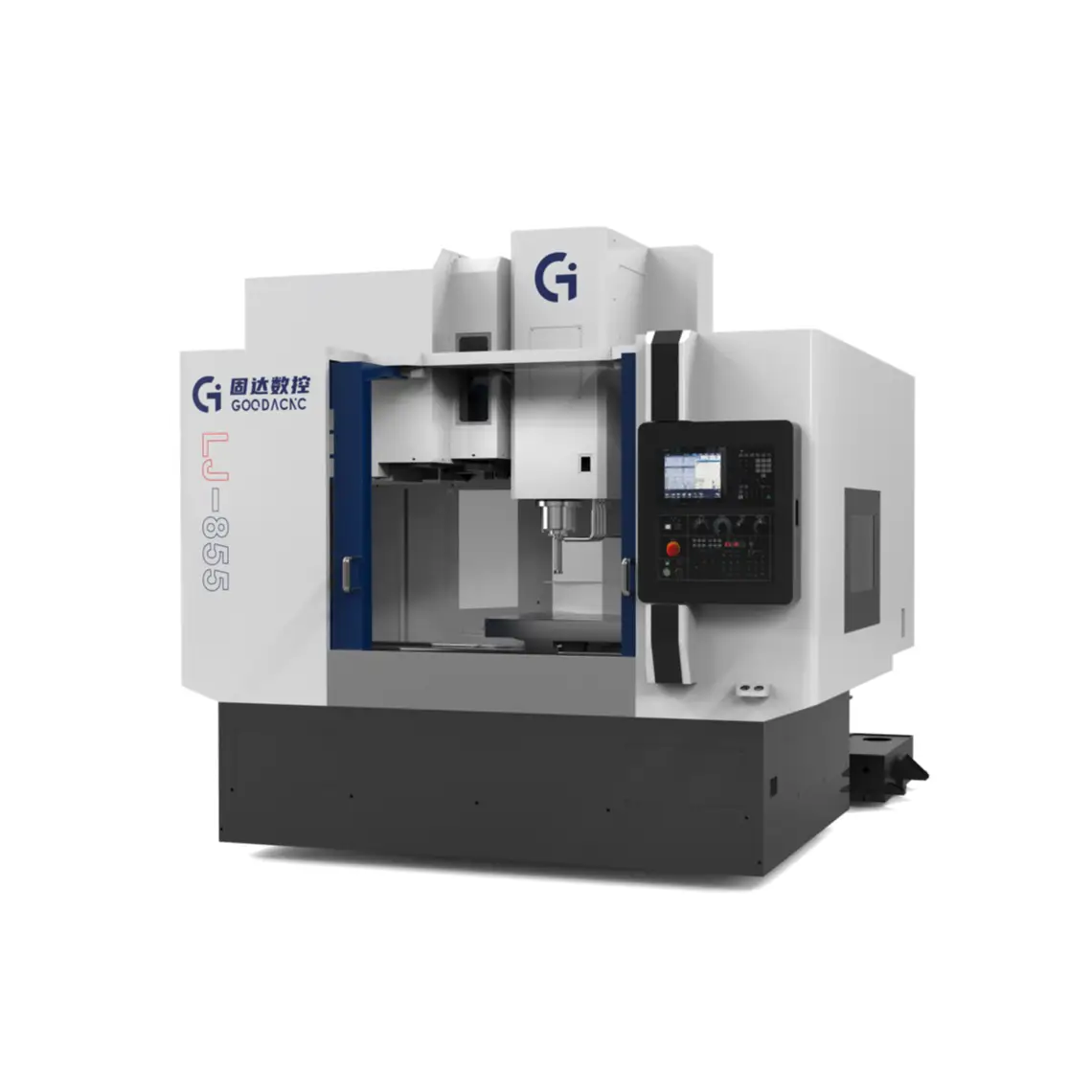
The mechanical sequence of a tool exchange begins when the CNC controller interprets a T-code, triggering the tool magazine to rotate the specific pocket to the exchange position. Most modern systems utilize a side-mount swing arm that moves independently of the spindle's Z-axis travel, allowing the magazine to pre-index the next tool while the machine finishes a cutting pass. A 2025 engineering study on high-speed machining centers showed that pre-indexing saved an average of 8 seconds per tool change compared to older carousel-style designs.
As the magazine aligns the new tool, the spindle moves to a fixed height known as the tool-change position to meet the mechanical arm. A dedicated orientation sensor ensures the spindle stops at a precise angle, allowing the drive keys to match the notches on the CAT40 or BT40 tool holder. In a testing sample of 250 industrial machines, accurate orientation prevented 99.9% of potential mechanical jams caused by misalignment between the arm and the spindle head.
"Proper spindle orientation is a prerequisite for the tool arm's gripper to engage the tool holder flange safely without damaging the tool change arm's hardened fingers."
Once the orientation is confirmed, the dual-sided gripper arm swings into place to grab both the tool currently in the spindle and the tool waiting in the magazine. A pneumatic actuator or hydraulic piston then applies a downward force to overcome the heavy spring tension holding the tool in the spindle taper. Research conducted in 2024 indicates that a clamping force of 10 to 18 Kilo-Newtons is necessary to prevent tool pull-out during aggressive milling of aerospace-grade titanium.
| ATC Phase | Mechanical Action | Technical Metric |
| Indexing | Magazine rotation to T-code | Speed: < 0.6 seconds per pocket |
| Unclamping | Pneumatic/Hydraulic release | Force: 12,000 - 15,000 N |
| Exchange | 180-degree arm rotation | Time: 1.2 - 2.8 seconds |
| Cleaning | Spindle taper air blast | Pressure: 90 - 110 PSI |
While the tools are being swapped, a high-velocity air blast is directed through the center of the spindle to clear away fine metal chips and coolant residue. Any debris trapped between the tool holder and the spindle taper can cause a geometric deviation of 0.01 mm or more, leading to poor surface finishes. In a 2023 experiment using 500 aluminum test parts, air-cleaning cycles reduced rejected parts by 28% by maintaining a clean interface for every tool insertion.
The gripper arm completes its 180-degree swap, placing the new tool into the spindle while moving the previous tool back into its storage pocket in the magazine. A locking mechanism within the arm ensures the tool holders do not fly out during the high-speed rotation, which can reach peak velocities of 3 meters per second. Modern vertical machining center units use heavy-duty needle bearings in the arm pivot to handle the centrifugal forces generated by tools weighing up to 8 kilograms.
"The use of cam-box drives for the tool arm provides a smooth acceleration and deceleration curve, which prevents mechanical shock to the machine frame."
Once the arm retracts to its home position, the spindle clamp re-engages, and the tool is ready for immediate use at programmed speeds often exceeding 15,000 RPM. The entire process is monitored by proximity sensors that verify each step of the sequence is completed before the next command is executed. A diagnostic report from 2025 found that sensor-monitored ATC systems have a mean time between failures (MTBF) of over 5,000 hours in high-production environments.
Advanced magazines utilize RFID tags or digital memory tables to keep track of the specific life and offset data for every tool in the library. This allows the vertical machining center to automatically skip a tool and alert the operator if a drill or end mill has exceeded its predicted lifespan of 120 minutes of cutting time. By managing tool life through the ATC software, manufacturers have observed a 14% improvement in overall equipment effectiveness (OEE).
| Magazine Type | Tool Capacity | Typical Use Case |
| Carousel / Umbrella | 16 - 24 Tools | Low-cost, light-duty milling |
| Swing-Arm Side Mount | 24 - 60 Tools | High-speed production VMCs |
| Chain Type | 60 - 120+ Tools | Complex multi-operation parts |
Chain-type magazines offer the highest capacity, using a continuous loop to store more than 100 individual tools for complex part manufacturing. These systems often include "random access" logic, where the controller remembers which pocket a tool was returned to, rather than forcing it back to its original slot. In a 2024 study of automotive component production, random-access tool mapping shortened the total cycle time of a 30-tool part by nearly 4 minutes.
The integration of the ATC with the machine's thermal compensation system ensures that the tool change height is adjusted as the spindle expands from heat. As the spindle reaches operating temperatures of 45°C, the software compensates for the 15-micron growth to ensure the gripper arm still aligns perfectly with the flange. This prevents physical wear on the ATC components and maintains the repeatability of the tool change sequence over long shifts.
"Thermal drift compensation in the Z-axis is as important for the tool changer's reliability as it is for the accuracy of the finished workpiece."
Precision machining centers now frequently include a laser tool setter situated within reach of the ATC to verify tool integrity after every change. If a 1.0 mm drill bit breaks during an operation, the laser detects the missing length and halts the program before the machine attempts the next move. This safety feature, tested across 400 production setups in 2023, prevented significant spindle damage in 100% of the recorded breakage events.
The seamless operation of the automatic tool changer is what enables modern machines to run without constant human supervision. By combining mechanical speed with digital tracking and cleaning protocols, the ATC ensures that the transition between different cutting operations is both fast and precise. This reliability is the foundation for automated manufacturing and the production of complex, multi-feature components in various industrial sectors.
Treat the MBA as a deliberate career investment.
Walsh MBA engineers positioning, narrative, and interview performance for executives who refuse to settle for average. Forty clients a year. No exceptions.
Book My Strategy Call